
Chapter 10 – Crane and Rigging Accessories
Sling Angle
ONLY SLINGS OR OTHER APPROVED DEVICES MAY BE USED FOR OVERHEAD LIFTING. MOST EYE BOLTS ARE NOT APPROVED DEVICES!!! USE APPROVED HOIST RINGS!!!
Resultant Sling Angle A KILLER!
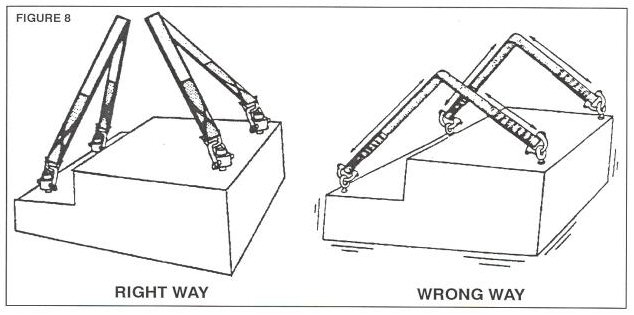
What is resultant sling angle?
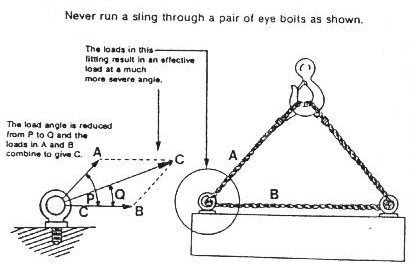
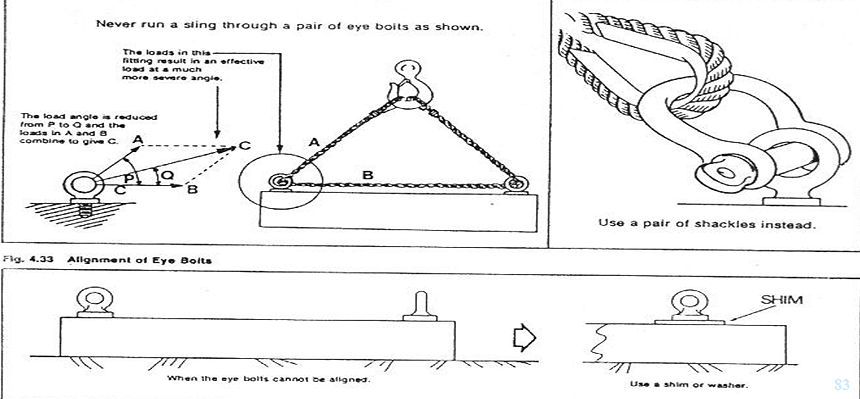
When one leg sling comes down to the load, travels horizontally, then goes back up and is attached back to the hoist hook.
What is the consequence of a resultant sling angle?
The apparent sling angle is cut in half, resulting in a much greater load on the sling.
Plate Clamps
-
Plate Clamps
-
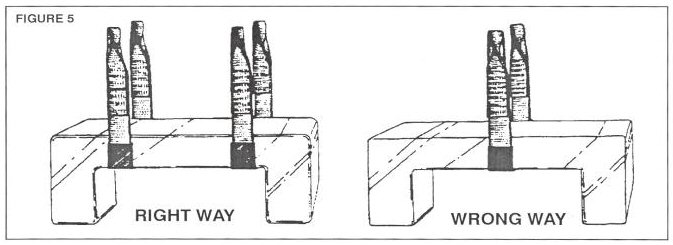
(a) Never use a plate clamp if the minimum jaw opening is larger than the thickness of the load.
-
(b) If a load is too long or flexible to be handled safely with one clamp, use a second clamp and a spreader beam.
-
(c) Never connect clamps directly to the crane hook, use a chain sling.
-
Magnets
- Keep the size of the load to a limit. If the load is too long, it may peel off either end on shock or impact.
-
Inspect that the load surface is clean of oil and dirt. Never lift on a curved surface, or any surface that does not cover the entire face of the magnet.
-
When lifting surfaces with scaling, rough, or rusting which is evident, reduce the magnet rating by fifty percent. (50%)
-
Check the ammeter before each lift to ensure an adequate charge.
-
Never tip batteries beyond 20 degrees. This will cause acid to spill and damage equipment.
-
Never move the load over the head of any person.
-
Store the magnet in the designated safe location. Report any defects to your supervisor.
Sling Hitches
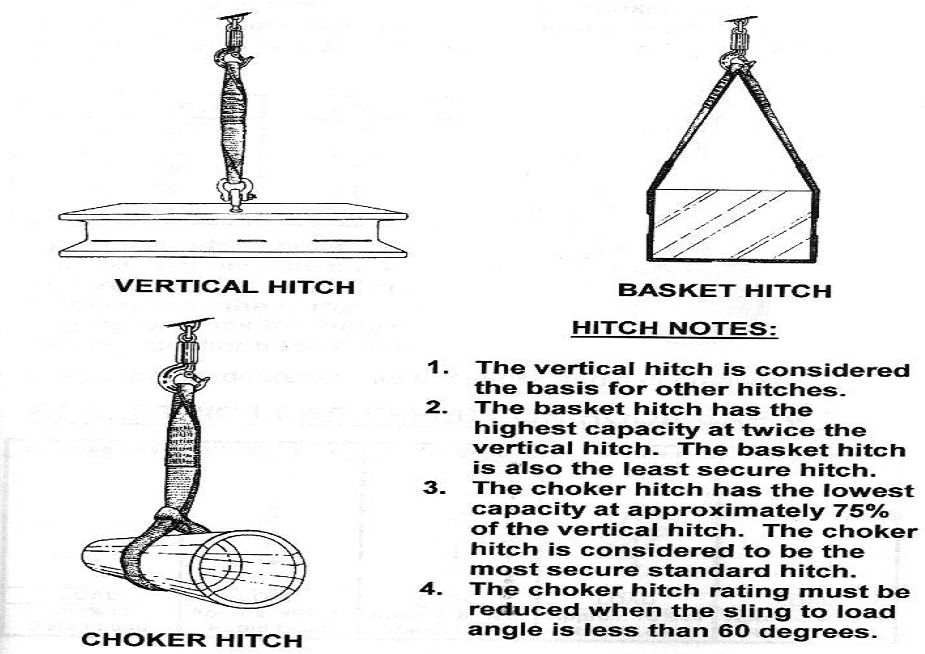
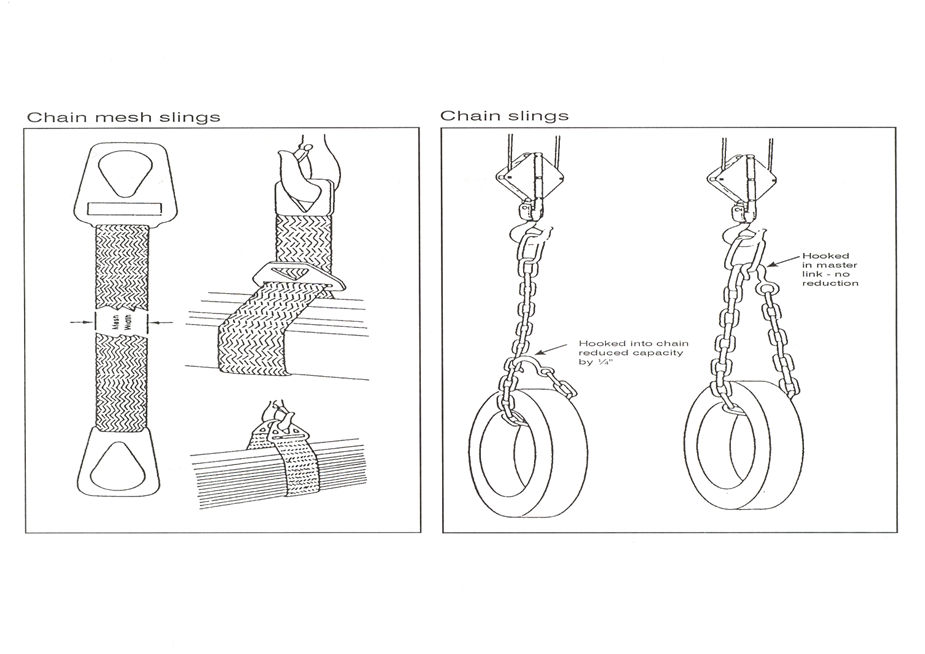
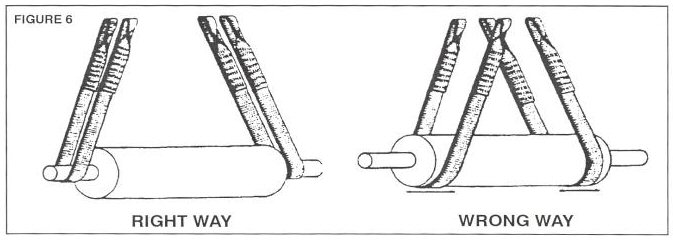
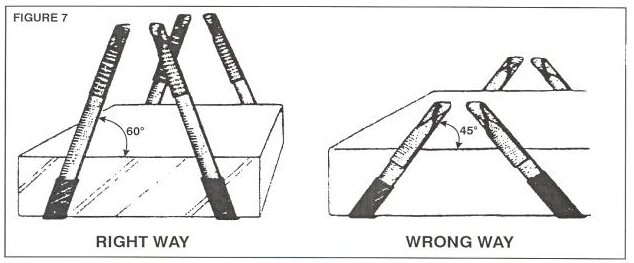
Sling Hitches – Right and Wrong Uses
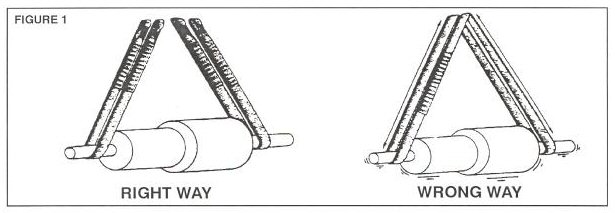
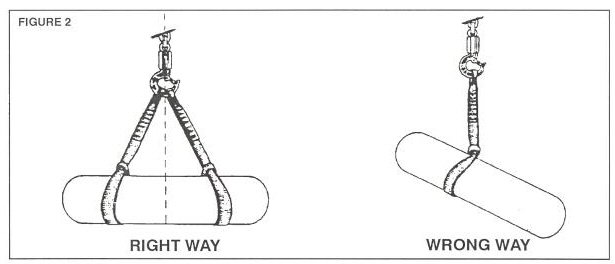
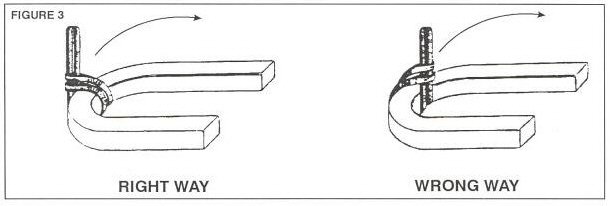
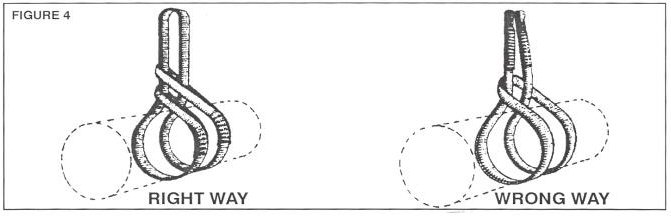
Hook Inspection Areas
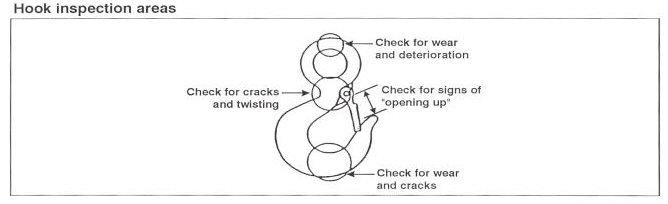
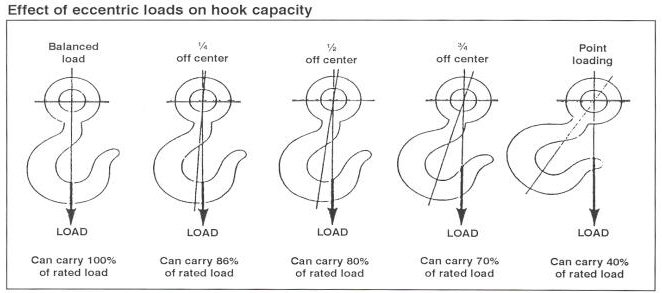
De-Rating Factor of Eye Bolts
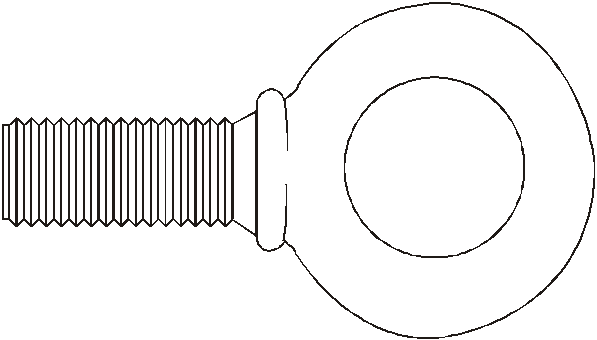
An eye bolt applied horizontally loses 75% of it’s capacity when pulled vertically.
Eye Bolts
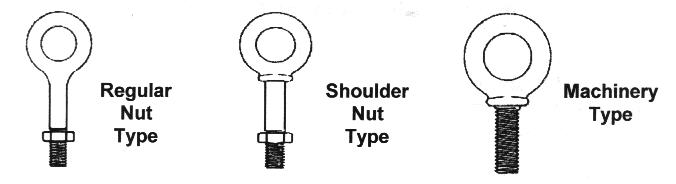
Three Types of Eye Bolts:
-
- Regular Nut Type
- Shoulder Type
- Machinery Type
- Always inspect before use.
- Never use an eye bolt that has evidence of wear or damage.
- Do not use an eye bolt if Shank or eye is bent or stretched.
- Always check that threads on the shank and receiving holes are clean and clear of dirt.
- Never tamper with an eye bolt. (machine, grind, cut, etc…)
- Never exceed beyond the manufacturers specified load limits.
- Do not use Regular Nut Type eye bolts for angular lifts.
- Angular lifts shall always be performed with shoulder nut eye bolts (or machinery eye bolts).
- Never undercut an eye bolt to seat shoulder against load.
- Always countersink receiving hole or use washers to seat shoulder.
- Eye bolts shall always be screwed down completely for proper seating.
- Nuts shall be tightened securely against the load.
- Follow the manufacturer’s specifications and directions.
Hoist Ring
There are three types of hoist rings:
- Swivel Hoist Ring
- Centre Pull Hoist Ring
- Side Pull Hoist Ring
Select the proper hoist ring for the job. Never attempt to apply more than the rated load capacity. The load capacity shall be marked on each hoist ring.
- Drill and tap the work-piece so that the hoist ring screw is installed perpendicular to the surface of the work-piece. Countersink the tapped hole to prevent the “swelling” of the top thread when the hoist ring bolt is torqued. The work-piece surface must be flat, providing complete contact for the hoist ring bushing.
- Never use spacers between the hoist ring bushing and the work-piece surface.
- When installing in soft metal, such as aluminum, the minimum effective thread engagement should be two times the diameter of the thread.
- Always tighten the screw to the proper torque value, which is marked on the hoist ring.
- During use the screw may loosen. Re-tightening periodically to the required torque must be done whenever the screw loosens.
- DO NOT APPLY SHOCK LOADS. Apply force gradually, when lifting.
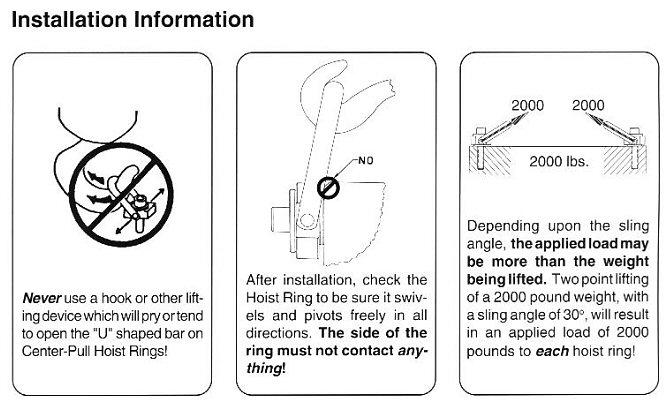
Hoist Rings
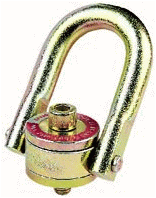
*If in doubt about the safety of using eyebolts, use swivel hoist rings instead.
*Swivel hoist rings – rotate & pivot to absorb any pitch, roll or sway of an unbalanced load. Will not yield or bend to heavy side loads.
Conclusion
Health and safety on the job is the responsibility of every employee.
Safety rules and regulations will not prevent accidents, but the awareness of
people toward accident prevention will.
Commitment and co-operation is required from all personnel to make
safety in the workplace a success.
Hoist and crane safety is just one critical element.