
Chapter 1 Danger Zone Copy
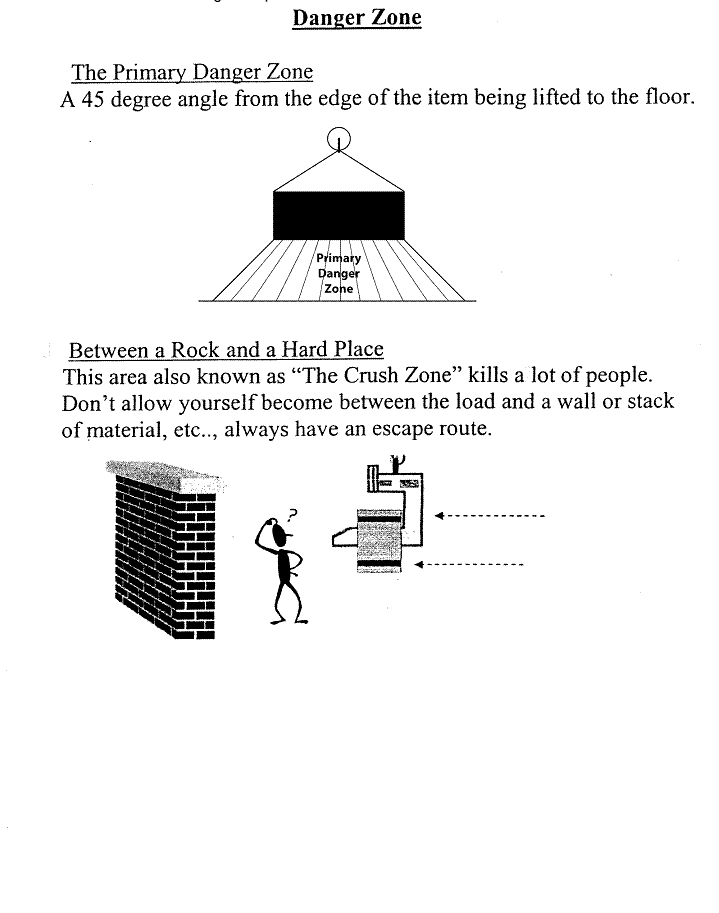
All operators MUST have an idea of what things weigh that they are lifting.
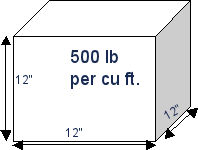 Calculations: Volume = Length X Width X. Cubic Weight
For estimating purposes, we assume one cubic foot of mild steel weighs 500lb.
So, if a load were 6′ x 2′ x 1′
Estimated weight total would be: 6000 lb
How do we estimate irregular shaped objects to be lifted?
A round steel ball that has 2 ft. diameter we are going to square it up. A 2 ft. diameter ball will result in a 2x2x2 square block. Estimated weight total would be 4000 lbs. The ball actually weighs less but we can use this weight estimate for the purposes of capacity verification and rigging etc.
Suppose we have an object that is made out of steel that has the shape of an engine and transmission. The method we will utilize for estimation purposes is that we will divide this object into two parts, calculating the weight of the engine portion and then calculate the transmission portion and add the two together.
So now we are able to estimate the weight of any object irregardless of it’s shape.
An operator must always have a reasonable understanding of the weight he is to lift
We will estimate only up to 70% of the capacity of the equipment we are using.
When you have estimated the load to be more than 70% of the capacity of the lift equipment, you must absolutely and positively verify the weight; Source for this information can be found:
- From the manufacturer of the equipment you are lifting
- From shipping documents that lists the specific weight
- From tags or labels that are affixed to the item being lifted. Verify that the tag weight includes the entire weight
The only people from whom you will take load weight advice is from someone who has a reason to know more that you do.
Ask your supervisor if you don’t feel that the information you have received is correct, then don’t make the lift, double check to be sure.

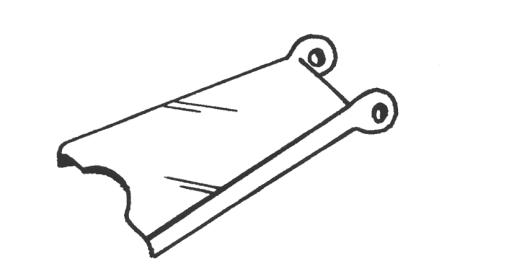
The latch is located in the hook opening and it’s primary function is to prevent an unloaded sling from coming off the hook.
Its secondary purpose is to determine if the hook tip was stretched by the position of the safety latch on the tip of the hook. If the tip of the hook is stretched it must be changed out.
Hook With Latch
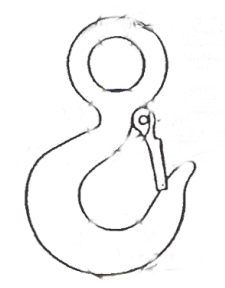
All crane hooks require a safety latch (The only exception is a foundry Crane)
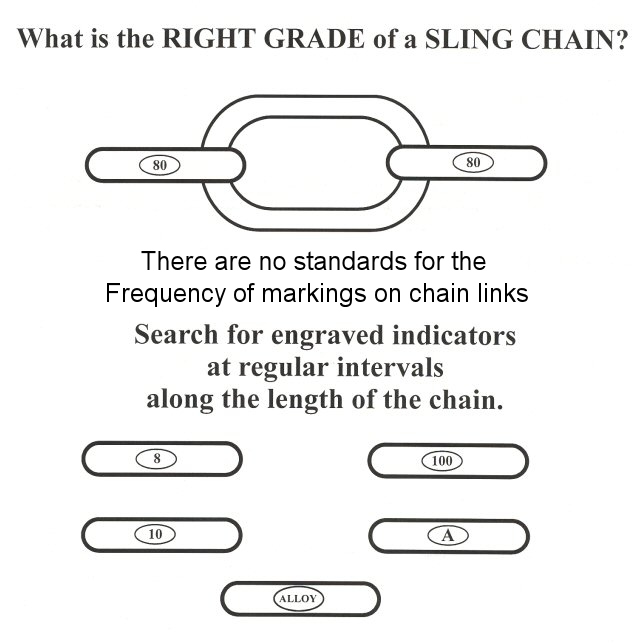
There are no rules as to the location, (which links) these markings should be placed. It varies between manufacturers. The above markings may be mixed with other letters and numbers that have no meaning for the operator. if you find any of the above then you can be assured that they are proper chains for rigging.
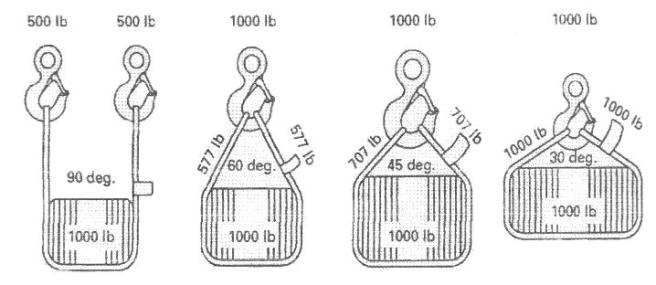
Please note that between 90 degrees and 30 degrees the load on the sling doubles in spite of the fact that the load has not changed.
The minimum sling angle that can be used for any type of sling, according to industry standards is 30°.
Beyond the 30 degrees, the load strain on the sling increases rapidly.
45° sling leg angle to the load shall be the minimum used on a day to day basis. Because – 45° is relatively easy to identify visually and if out by a degree or two will still be within industry standards.
At a 30° Angle Between the Horizontal Plane & Sling Leg
The Load on a Sling Leg
DOUBLES
from a 90 Degree Angle
 Legal Illegal
They can be legal IF they are:
- Engineered to 3:1 Yield
- Engineered to 5:1 Ultimate
- Welded to ANSI/AWS D1.1
- Manufactured with only Proper components.
- Manufactured Properly.
- Have mechanical and electrical components Tested.
- Load Tested.
- Protected from degradation.
- In compliance with ANSI, NFPA 70, NEC, AISC, NEMA & other applicable codes.
- Marked Properly.
- Inspected Prior To Use per ASME B30.20
There are only two items on the above list that are within the control of the operator.
# 10 and # 11
Who does the inspection?
The crane operator. He is inspecting it for any kind of damage that will cause a question of the device’s ability to lift the load for which it is rated. He also needs to look for the proper markings.
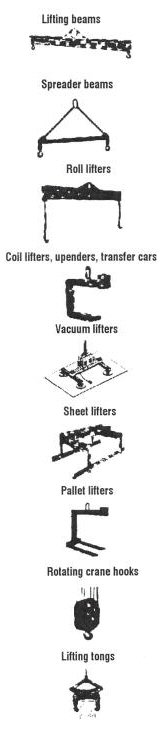 The following information should be
ON ALL below-the-hook devices.
- Manufacturer’s Name
- Manufacturer’s Address
- Serial Number
- Warning Tag. A warning tag may be placed by the manufacturer limiting the use of the device.
- Capacity
- Weight – If over 100 pounds. Note: The weight of the device must be added to the load to determine capacity for lifting all components.
#5 and #6 are the most essential of the above
Without these a lift cannot proceed.
If damage is found the only option for an operator is to determine if the device can lift the load for which it is rated.